Quiby
A quit-smoking app for Gen Z, built around a buddy who keeps you accountable, with daily check-ins and no streak to lose when you slip.
The short version
- Problem
- Many smokers struggle to quit because existing solutions rely on tracking or fear-based messaging, which feels isolating when they relapse.
- What we built
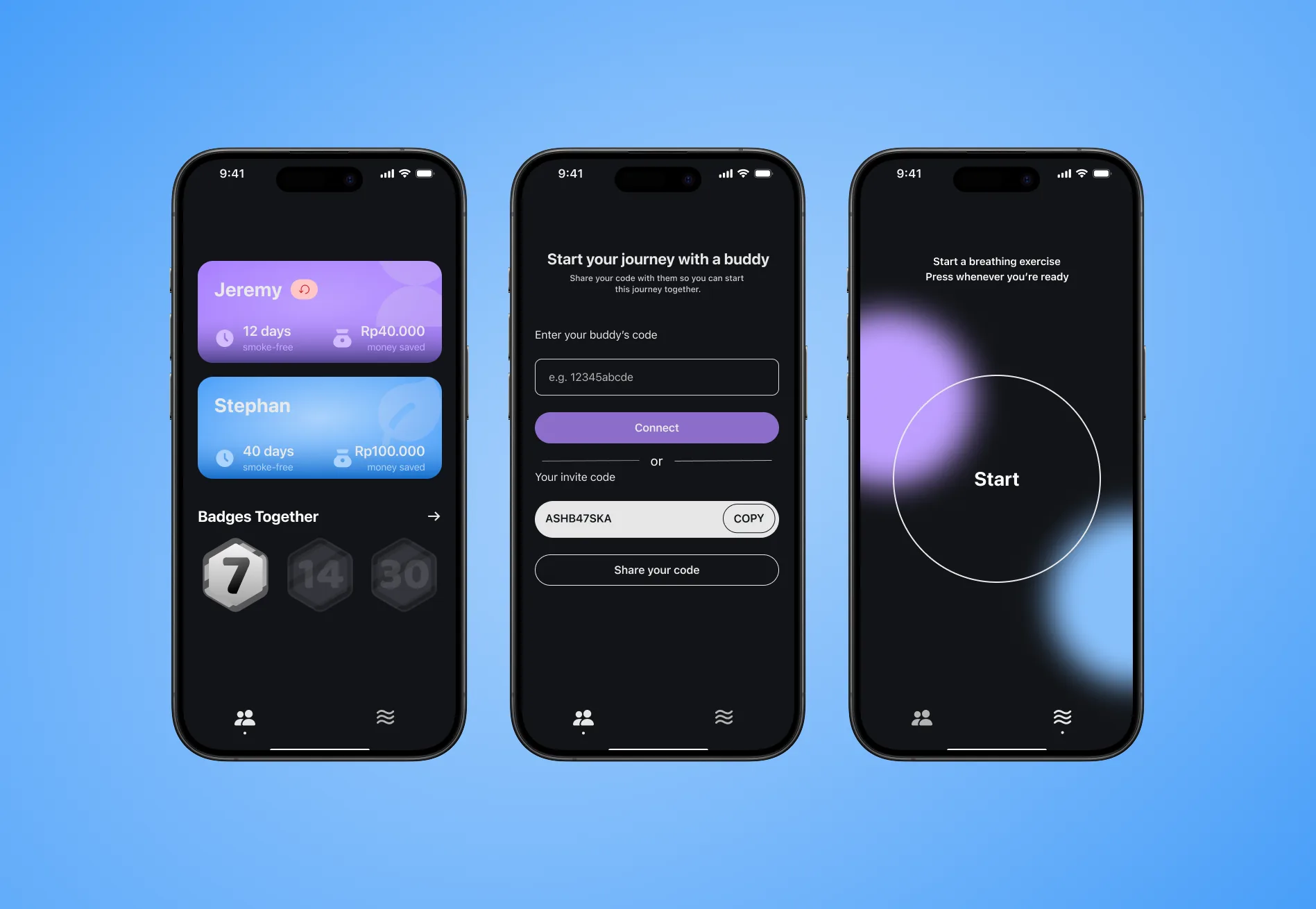
- A behavior-change app that pairs Gen Z smokers with a buddy for accountability and emotional support, emphasizing human connection over willpower.
- What happened
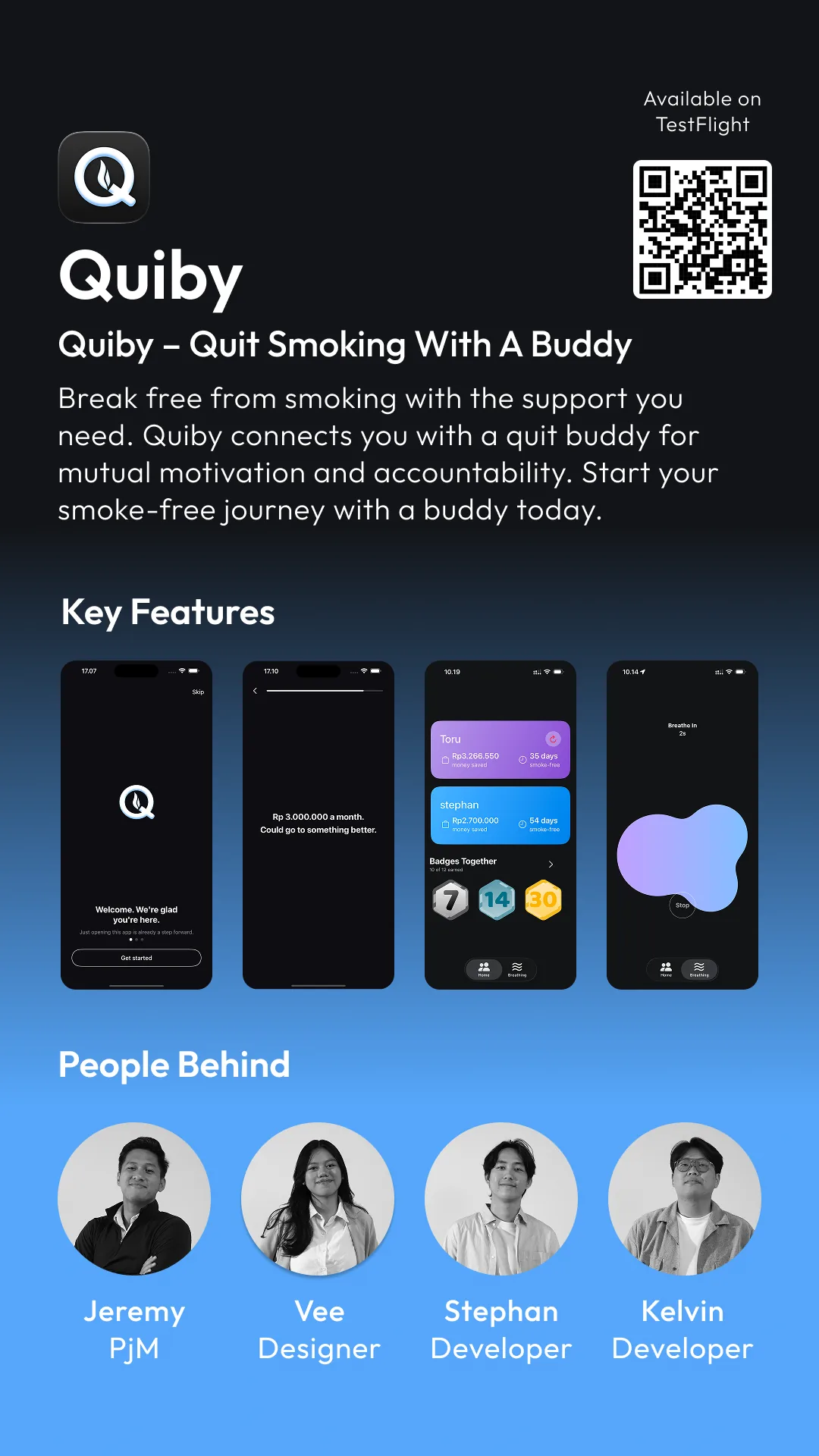
- Released to testers through TestFlight. When we exhibited Quiby, visitors told us that quitting alongside a buddy would feel less lonely.
The problem
Many people want to quit smoking but struggle to stay consistent, especially during moments of stress or low motivation.
Existing solutions often rely on tracking, reminders, or fear-based messaging. Cravings are often emotional, not just physical, so stress and low motivation trigger relapses that tracking apps can’t address. And when people slip up, “streak” resets make them feel judged, which discourages them from trying again.
What we learned
- Cravings are often emotional, not just physical
- Users are more honest when they don’t feel judged
- Social accountability works best when it feels mutual
- Progress should feel flexible, not fragile
These insights directly informed the decisions below.
Decisions
A buddy system
instead of solo tracking
Shared accountability, so quitting feels less isolating and easier to commit to.
Encouraging language
instead of alerts
Microcopy focused on empathy rather than pressure or guilt.
No failure states
instead of streak resets
A relapse didn’t reset progress or shame users.
Soft visuals and calm interactions
Designed to reduce anxiety during cravings, not amplify it.
What I built
On the front-end side, I:
- Implemented the core flows for buddy pairing and daily emotional check-ins
- Built reusable UI components focused on clarity and warmth
- Made interaction feedback smooth, to support people through difficult moments
- Prioritized responsiveness and accessibility for daily use
Outcome
- Released to testers through TestFlight
- When we exhibited Quiby, visitors told us that quitting alongside a buddy would feel less lonely


What I’d take forward
In a behavior-change app, how something is said matters as much as what it does. A kind line of copy, or progress that survives a slip, can be what makes it easier to come back after a bad day.
- UX design is as much about emotional timing as layout
- Front-end implementation directly shapes user trust
- Language and micro-interactions can influence behavior
- Removing pressure can increase long-term engagement