NusaPay
Global wallets, local payments: a proposal that lets tourists pay any QRIS merchant in Indonesia with the cards and wallets they already carry.
The short version
- Problem
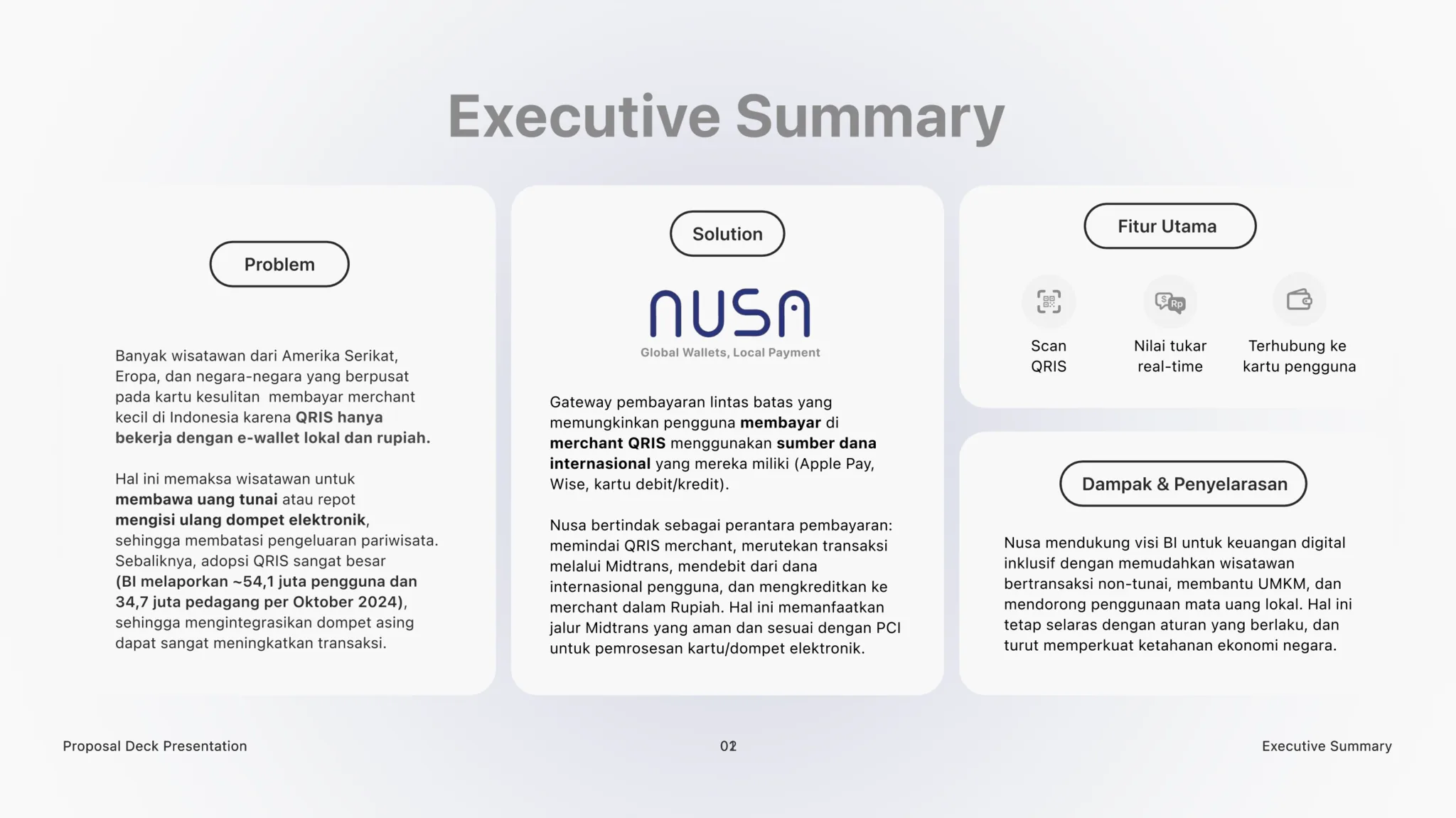
- Indonesia’s QRIS is inaccessible to most international tourists, who rely on global cards and wallets. They can’t pay small MSMEs, which means friction for them and lost revenue for merchants.
- What we proposed
- A non-custodial gateway that lets global wallets such as Apple Pay and Wise pay any QRIS code, settling to local merchants in rupiah within the regulated system.
- What happened
- A conceptual proposal for the BI–OJK Hackathon 2025, designed to increase tourist spending at MSMEs while keeping foreign currency inflows inside the national payment ecosystem.
The gap
Indonesia has one of the world’s most successful QR payment systems. Bank Indonesia reported around 54.1 million QRIS users and 34.7 million merchants as of October 2024. Yet for practically all international tourists, it is unusable.
QRIS only works with local e-wallets and rupiah. Tourists don’t want to download local apps and top up a balance they can’t cash out. They want to use the cards and wallets they already trust.
My role
Unlike a typical design project, my focus here was on feasibility, business logic, and regulatory alignment.
- Problem framing: defining the specific regulatory and user friction points
- Business model: designing a fee structure that gives every stakeholder a reason to take part
- Regulatory alignment: keeping the flows non-custodial to satisfy BI and OJK rules
- Pitch narrative: translating technical flows into a compelling business case
Decisions
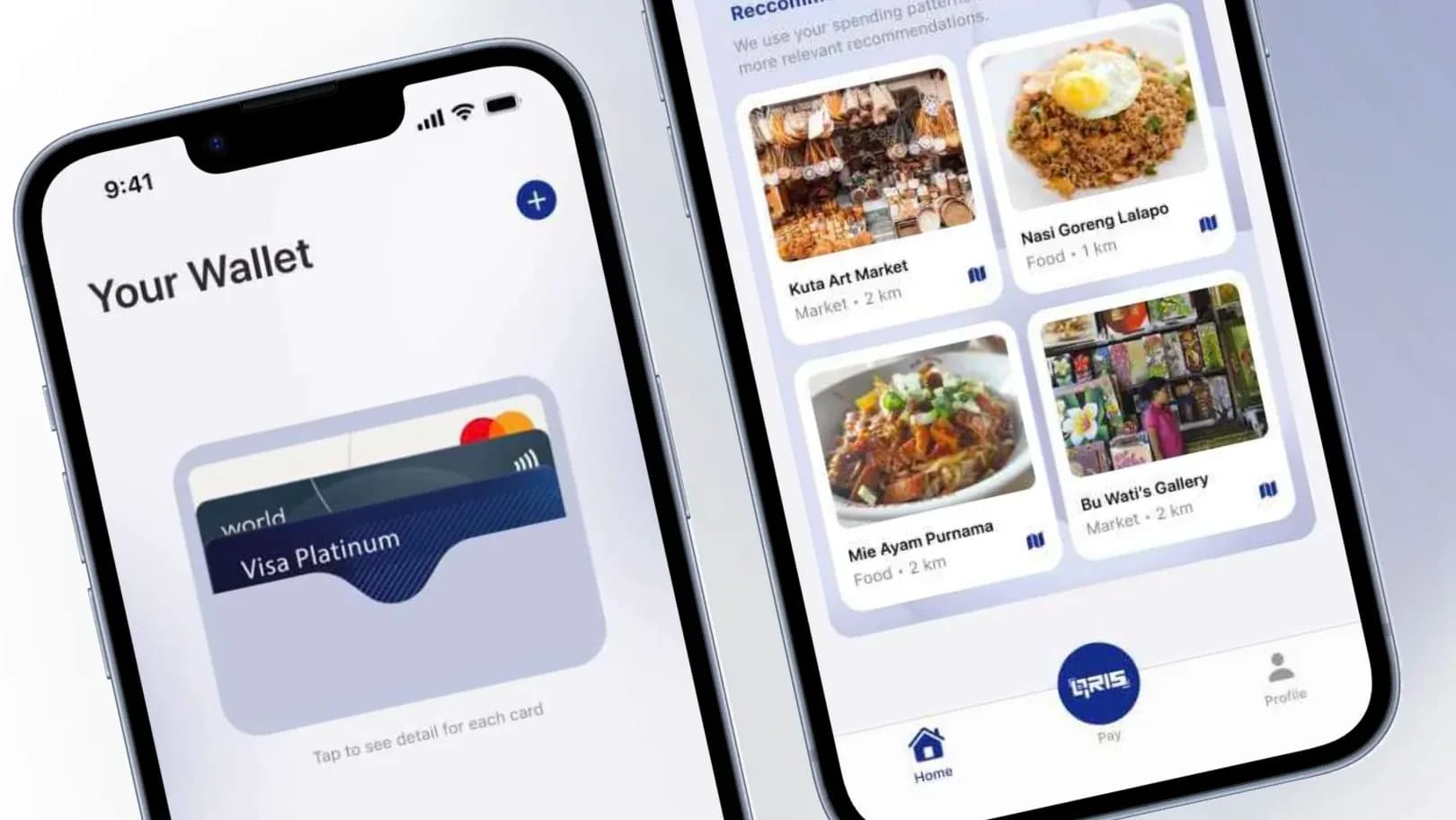
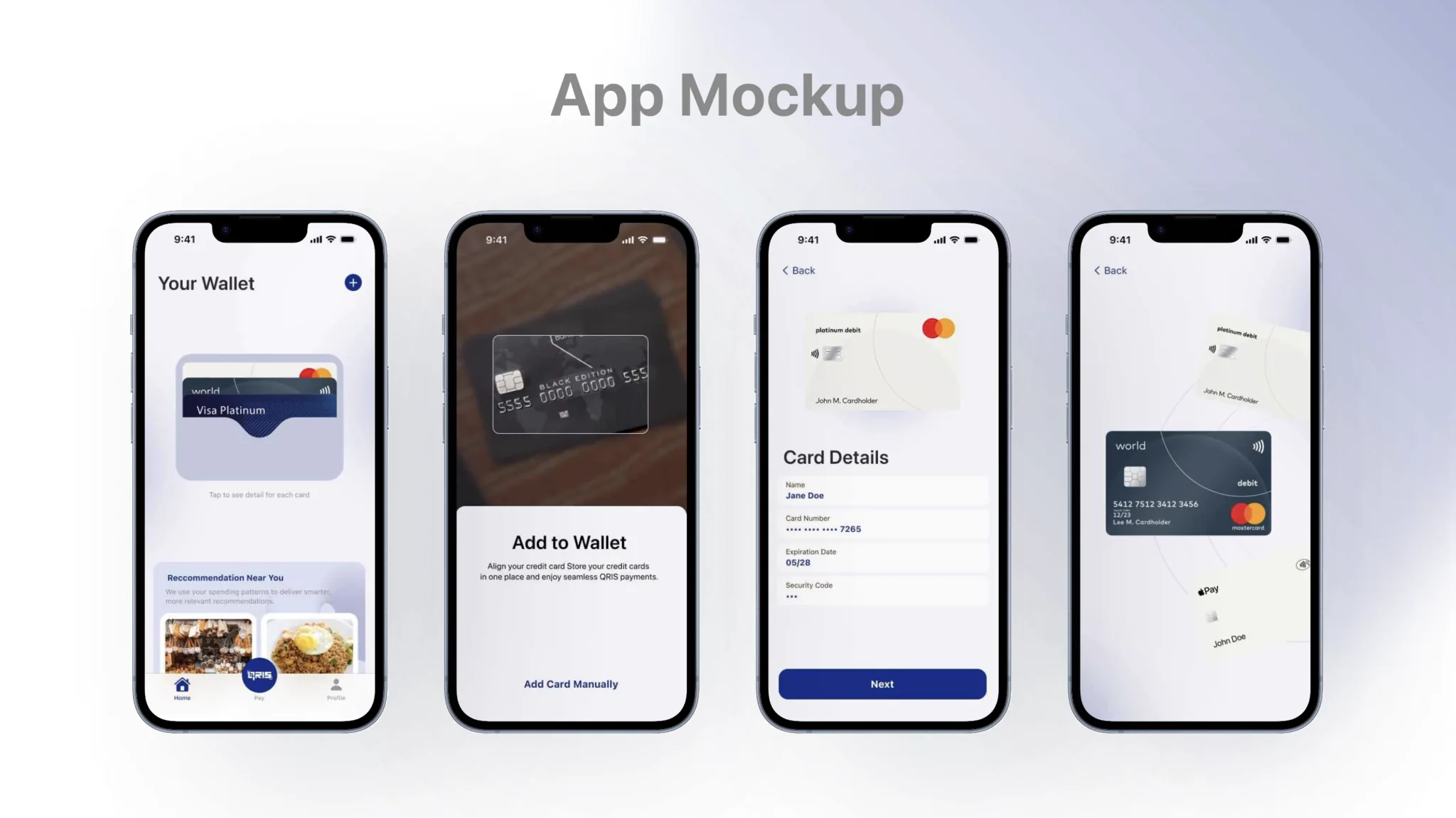
Pay with the wallets tourists already have
instead of a local e-wallet to download and top up
Tourists keep using Apple Pay, Wise, or their own debit and credit cards. Nothing new to install, and no leftover balance.
A non-custodial gateway
instead of holding user funds
We don’t hold funds, which reduces risk and keeps the product within what regulators will accept.
Settle merchants in rupiah
Merchants receive IDR, which protects monetary sovereignty and asks nothing new of the smallest sellers.
How it works
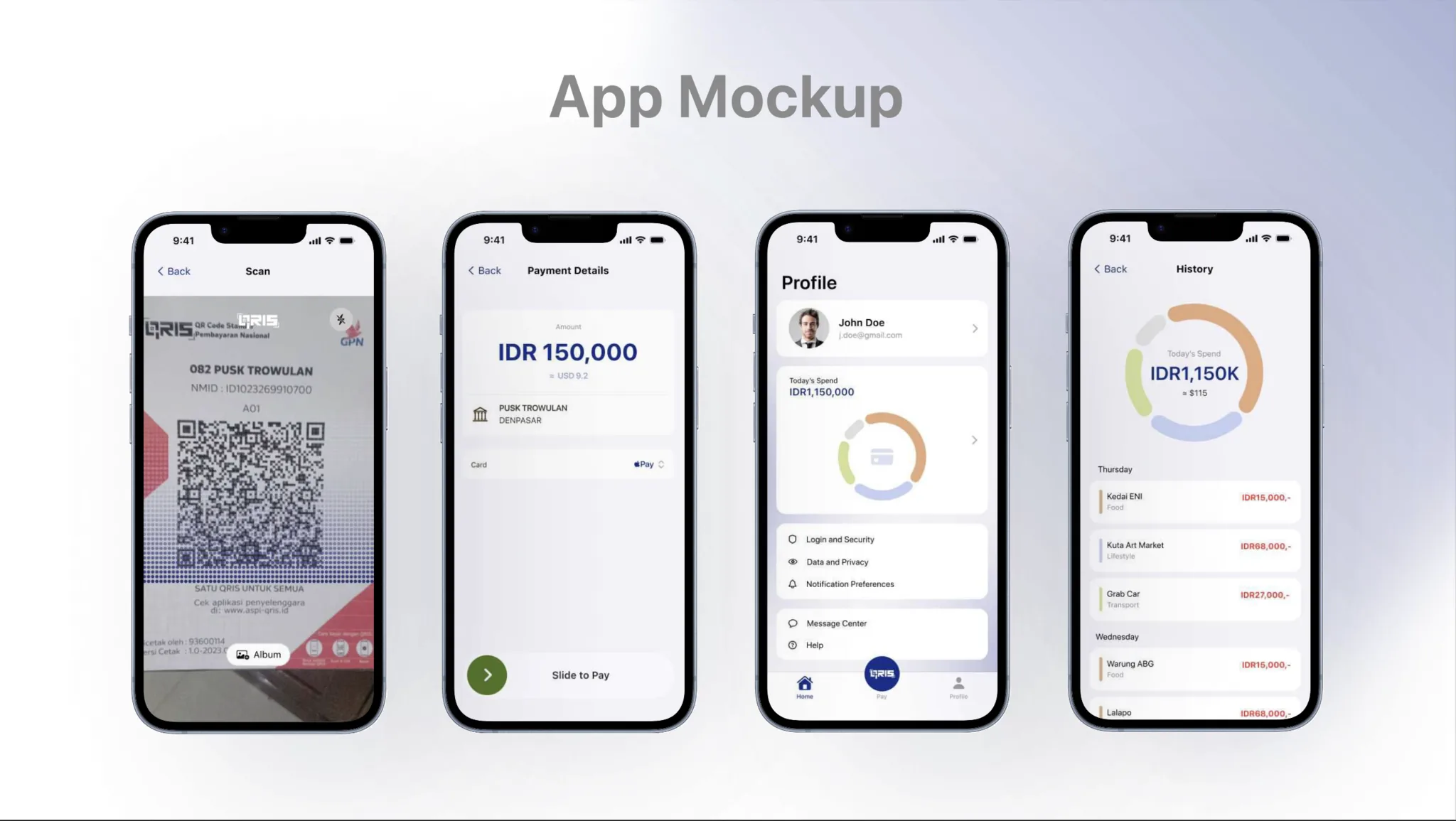
- The tourist scans a standard QRIS code in NusaPay
- NusaPay identifies the merchant and the amount
- The tourist pays with Apple Pay or a global card
- NusaPay settles the payment to the merchant in IDR
Payments would route through Midtrans, which is PCI-compliant for card and e-wallet processing.
Reflection
NusaPay strengthened how I think about building products in regulated environments. It taught me that in fintech, trust and compliance are features, not afterthoughts.
It’s the kind of problem I like most: one where the product only works if the business model and the regulation work too.